
Every access event inside a facility tells a story. A door opened late at night, a badge used outside normal hours, or a biometric scan during unexpected attendance patterns can signal more than routine activity. Predictive access management transforms these everyday data points into early warnings, allowing organizations to anticipate security risks before they escalate into breaches.
Here’s a detailed guide on how predictive systems shift access control from passive monitoring to intelligent, forward-looking protection.
What Is Predictive Access Management?
Predictive access management applies AI and analytics to historical and real-time access data to identify trends, anomalies, and potential threats. Instead of responding after incidents happen, systems evaluate behavioral patterns across the building access control system to forecast unusual or risky activity. This approach helps organizations prevent breaches rather than simply investigate them.
Why Are Organizations Moving Toward Predictive Security Models?
Traditional door access control reacts to violations after they occur. Research indicates that security strategies are increasingly prioritizing predictive and preventative capabilities as organizations face complex internal and external threats. Predictive access management supports this shift by enabling earlier intervention based on data-driven insights rather than manual observation.
How Does AI Analyze Biometric and Card Access Logs?
AI processes large volumes of biometric scans, swipe card records, and access timestamps to establish normal behavior baselines. Systems connected to a door access control system in Qatar learn expected entry times, locations, and frequencies for each user. Deviations from these patterns, such as access attempts at unusual hours, trigger alerts for further review.
How Are Attendance Trends Used to Forecast Risk?
Attendance data adds critical context to access decisions. When AI analyzes records from a time attendance system, it can correlate absences, shift changes, and leave patterns with access behavior.
According to a data breach report, organizations with fully deployed AI and automation in security had an average breach life cycle 108 days shorter than those without automation, demonstrating how correlated data and automated insights improve anomaly detection and response.
What Role Do Smart Cards and Biometrics Play?
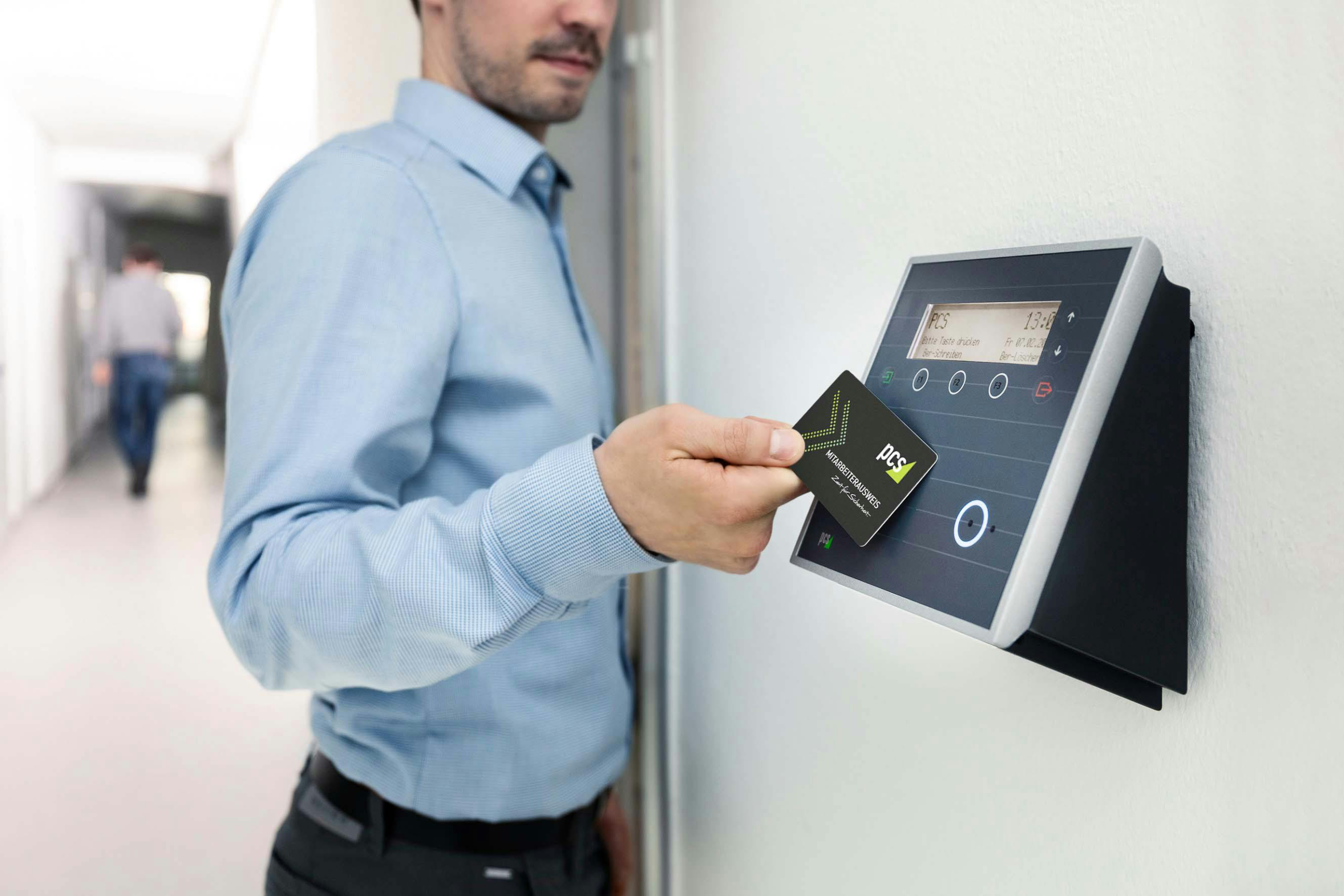
A smart card access control system provides structured, timestamped data that AI can easily analyze. Biometric systems enhance this by verifying identity accuracy. Deployments using a biometric attendance system in Qatar reduce credential sharing, allowing predictive models to rely on higher-quality identity data. Accurate inputs are essential for meaningful forecasts.
How Does Predictive Access Management Reduce Insider Threats?
Insider threats often emerge through gradual behavior changes rather than overt policy violations. Predictive access management monitors patterns such as repeated access to sensitive areas, unusual entry times, or deviations from normal attendance routines.
By identifying these shifts early, security teams can investigate potential risks, adjust permissions, and intervene before minor irregularities escalate into serious security incidents.
How Predictive Systems Work Across Multiple Facilities?
Predictive platforms integrate data from multiple sites into centralized dashboards. Organizations using Matrix access control solutions benefit from unified visibility across offices, campuses, and industrial sites.
This allows AI to compare behavior across locations and identify risks that may not be visible within a single facility.
What Are the Operational Benefits Beyond Security?
Predictive access systems also improve efficiency. Automated alerts reduce the need for constant manual monitoring. Security teams focus on high-risk events rather than reviewing routine logs. Research on analytics-driven operations suggests that predictive insights improve decision-making speed and resource allocation, supporting both safety and productivity.
How Is Predictive Access Applied in Qatar-Based Industries?
Government and Public Sector
Government entities require advanced protection for sensitive facilities. Predictive analytics help identify abnormal access behavior early while maintaining smooth operations for authorized staff.
Banking and Financial Institutions
Banks use predictive models to monitor access to vaults, data centers, and restricted offices, strengthening compliance and internal risk management.
Construction and Industrial Sites
Large sites with rotating workforces benefit from predictive monitoring that aligns attendance trends with access permissions, reducing unauthorized entry risks.
What Are the Key Implementation Considerations?

Successful predictive access management requires:
- High-quality access and attendance data
- Integration between access, attendance, and HR systems
- Clear alert thresholds and escalation workflows
- Ongoing model refinement and review
Organizations should ensure that predictive access management systems support transparency and align with internal policies.
Frequently Asked Questions
1. What data does predictive access management analyze?
It analyzes biometric logs, card swipes, attendance records, and access timestamps.
2. Does predictive access replace traditional security controls?
No. It enhances existing controls by adding forecasting and early detection capabilities.
3. Are predictive systems suitable for medium-sized organizations?
Yes. Scalable platforms support organizations of varying sizes and complexity.
4. How accurate are predictive alerts?
Accuracy improves over time as AI models learn normal behavior patterns.
5. Is data privacy maintained?
Yes. Systems use encryption, access controls, and compliance frameworks to protect data.
Predictive Security Solutions with Adax Business Systems
Adax Business Systems delivers advanced solutions that help organizations move from reactive to predictive security strategies. By combining intelligent analytics with a reliable smart card access control system, enterprises gain early visibility into potential risks.
Our team integrates accurate fingerprint attendance data, advanced Matrix Argo face recognition system technologies, and scalable cloud based attendance system platforms to strengthen predictive insights.
Complemented by secure perimeter solutions such as automatic barrier arm gates, Adax supports government, banking, construction, healthcare, and commercial clients across Qatar. With expert design, deployment, and support, Adax Business Systems enables proactive access control that anticipates threats while maintaining efficient, compliant operations across evolving enterprise environments.
Contact us today to design, deploy, and manage intelligent, data-driven access solutions across Qatar.